
How To Remove Hair Dye From Skin: 10 Easy At-Home Methods

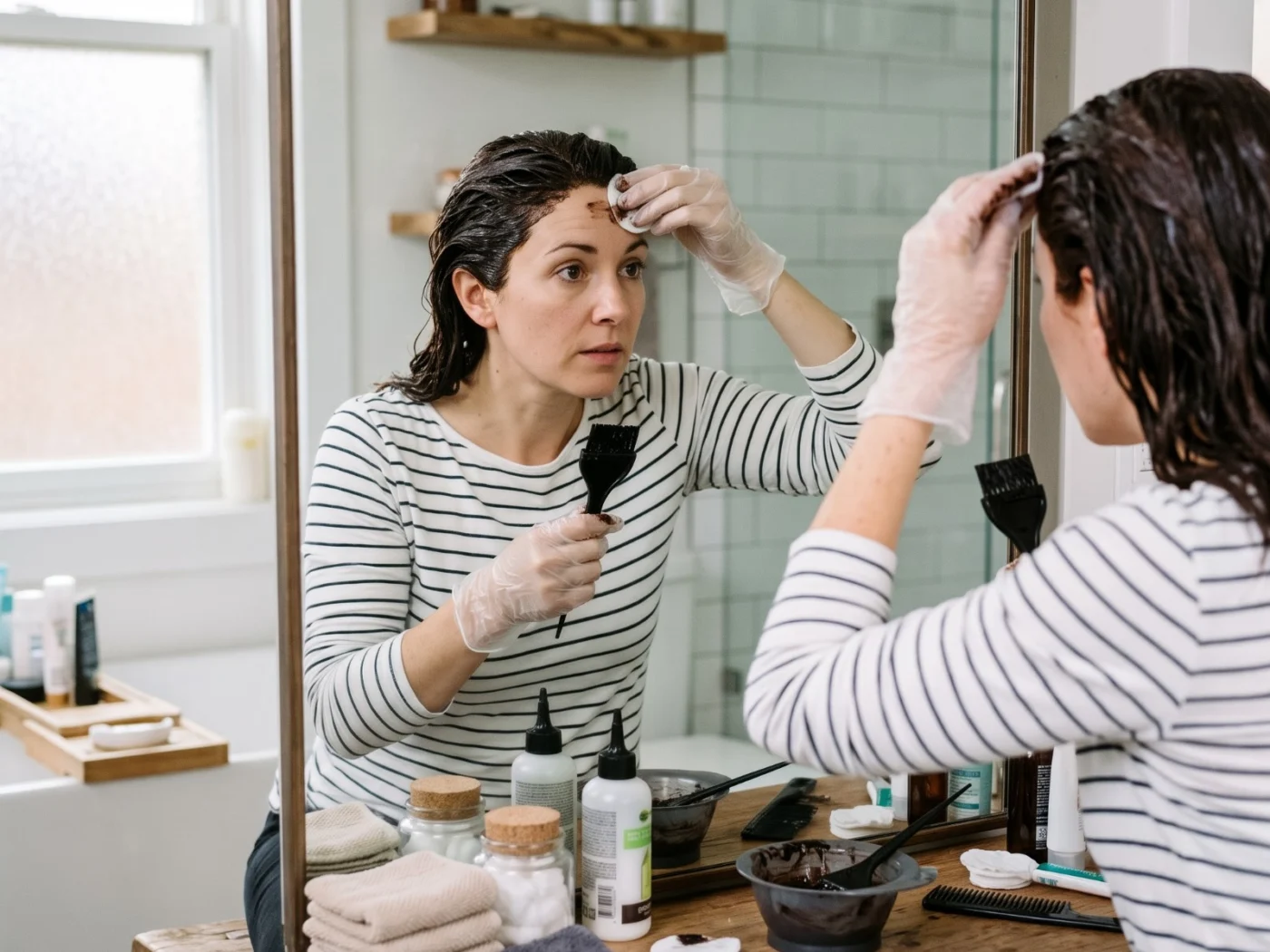
Hair dye may help you achieve a totally new look. But sometimes, when you try dyeing your hair yourself, you may notice some unwanted dye patches on your forehead, ears, neck, or hands.
If you have already faced such an unpleasant situation, then don’t get upset – many people who tried to dye their hair without professional help faced the same problem.
But here is good news: hair dye stains can be significantly reduced at home. The key is to react immediately and try mild ways to remove stains instead of turning to more severe ones.
Let’s talk about 10 different ways to remove hair dye from skin, as well as how to prevent stains and know when a stain is something other than leftover dye.
Why Does Hair Dye Stain Skin?
Hair dye contains pigments that help to color hair. When this substance gets in touch with your skin, some of the dye pigments can remain there, leaving you a stain.
Stains appear mainly on those body parts where hair dye comes into contact: forehead, hairline, ears, neck, and hands.
It’s easier to clean fresh hair dye than dried. That’s why it’s recommended to wipe accidental stains.
10 Tips For Getting Hair Dye Stains Off Your Skin
1. Wash With Mild Soap and Warm Water
The simplest solution should be applied first. Soak the stain in lukewarm water and mild soap or detergent.
Gently massage the stained area using your hands or a cloth. Then rinse the stain. If the stain is still fresh, then the dye can be washed out by this method.
Avoid using scrubs on your skin since it may become irritated.
2. Use Petroleum Jelly
It is the best substance for getting rid of the stain. Petroleum jelly is effective when dealing with the stain in the hairline and ear area.
Apply some petroleum jelly to the area and gently rub it for several minutes. After that, rinse the area with soap and water and wipe out the petroleum jelly using a cotton swab.
It is advisable to apply it before the hairline is dyed.
3. Use Olive Oil
A bit of olive oil will help you remove the pigments from your skin.
Just apply it to the cotton pad and massage it into your skin for a couple of minutes. Rinse off with the cleanser.
If the stain persists, repeat the procedure a bit later, but not immediately.
4. Try Micellar Water
Micellar water is a good alternative if you stained your face with a dye.
Simply apply it to a cotton pad and gently cleanse the stain.
If the stain is dry, several applications may be required.
Do not rub the skin again and again, in case it becomes sore and irritated.
5. Use Gentle Facial Cleanser
Sometimes your facial cleanser may also be able to help you get rid of the stain.
Just wet the area with water, put the cleanser there, massage it, and rinse with lukewarm water.
This method is very effective if you have stained your forehead and temples.
6. Use Rubbing Alcohol Cautiously
Rubbing alcohol might be useful in removing persistent stains caused by dye, especially on the palms, but it’s not the ideal product to be used on the delicate face.
If using, place a small quantity on a cotton pad and rub softly on the stain before washing it off and moisturizing the skin.
Never use rubbing alcohol in areas around the eyes, lips, open wounds, and irritated skin areas.
7. Consider Using Toothpaste
One can choose to use toothpaste since some have mild abrasives that could work on removing surface pigments.
In case of use, apply a small quantity, massage gently, and rinse.
Note that toothpaste is not meant to be used as a skin stain remover and can irritate the skin after constant rubbing of the same.
8. Be Cautious with Baking Soda
The use of baking soda as a treatment for staining skin is another popular remedy.
Since baking soda acts as an abrasive material, it could work to loosen surface pigmentation.
Use very little and apply it gently.
Baking soda is a potential irritant to the skin, so be careful and consider not using this method at all if you have sensitive skin.
9. Apply a Skin Stain Remover for Hair Dye
If you dye your hair, keep a solution that will help you remove hair dye stains from skin.
Remember to carefully follow the directions on the package and make sure that the solution is meant to be used on the skin.
Do not confuse a stain remover for skin and hair color remover. Just because the latter removes color from hair does not mean that it can be used on skin.
10. Let It Fade on Its Own
There might be situations when the safest approach would be doing nothing.
If there is only a faint stain left and your skin is getting red and/or dry or irritated, you should not keep trying to get rid of it because the stain will fade eventually just due to normal washings and skin renewal.
Using various removal techniques at once can irritate your skin even more than the stain.
Which Method Is Good for Your Face?
When it comes to facial skin, it is better to use the least irritating means: mild soap, face cleanser, micellar water, petroleum jelly, or a little bit of oil.
Aggressive chemicals and scrubs, especially around the eyes, should be avoided.
In case the hair dye got into your eyes, rinse them with plenty of water. Do not apply any kind of stain remover or other solutions to the eyes because the hair dye can harm your eyes. That is why the FDA recommends keeping the hair dyes away from the eyes.
What Is the Way to Protect Yourself from Damage by the Dye?
Better be safe than sorry. Apply a layer of petroleum jelly to your skin near the hairline, ears, and neck before applying hair color. Do not put petroleum jelly on hair you will be dyeing.
In addition, it is highly recommended to use gloves while applying dye and to keep a wet cloth or cotton ball handy just in case some dye drops on your skin.
Of course, it is extremely important to follow all recommendations. The FDA recommends wearing gloves, performing a skin test, applying dye away from the eye area, and not leaving product on the skin for too long.
When Should You Be Concerned?
Staining does not automatically mean an allergic reaction, but itchy skin, burning sensation, redness, swelling, rash, or raw skin may indicate irritation or allergy to the dye.
Even those who have already applied that particular dye before may experience an allergic reaction. It is highly recommended to stop using the product and consult a medical professional in case of a strong reaction.
Never try to use home remedies for stain removal on irritated skin.
Conclusion
Hair dye removal from the skin does not always require harmful chemical products or harsh rubbing. The first thing to use is regular soap with warm water, and then try some other gentler methods such as petroleum jelly, micellar water, oil, or a safe stain remover.
The most important thing is to be patient, and it is better to have a little stain than irritated skin as a result of the trial of various products.
Frequently asked questions
The best solution is mild soap with lukewarm water. If it does not help, try micellar water, petroleum jelly, or a cleansing product.
Petroleum jelly helps to remove dye from the skin's surface, but it is also great to use it to protect your skin around hair before dyeing.
It might help to remove a tough stain, especially on hands, but baking soda can be quite drying and irritating for skin. Do not rub the skin roughly.
Yes, they do. Mild hair dye stains can naturally become invisible.
References
- U.S. Food and Drug Administration: Hair Dyes
https://www.fda.gov/cosmetics/cosmetic-products/hair-dyes - American Academy of Dermatology: Coloring and Perming Tips
https://www.aad.org/public/everyday-care/hair-scalp-care/hair/coloring-perming-tips - L'Oréal Paris: How to Remove Hair Dye From Skin
https://www.lorealparisusa.com/beauty-magazine/skin-care/skin-care-essentials/how-to-remove-hair-dye-from-skin - Healthline: How to Get Hair Dye Off Skin
https://www.healthline.com/health/how-to-get-hair-dye-off-skin - U.S. Food and Drug Administration: Allergens in Cosmetics
https://www.fda.gov/cosmetics/cosmetic-ingredients/allergens-cosmetics

Comments 0