
The Ultimate Way to Cook Bacon in The Oven

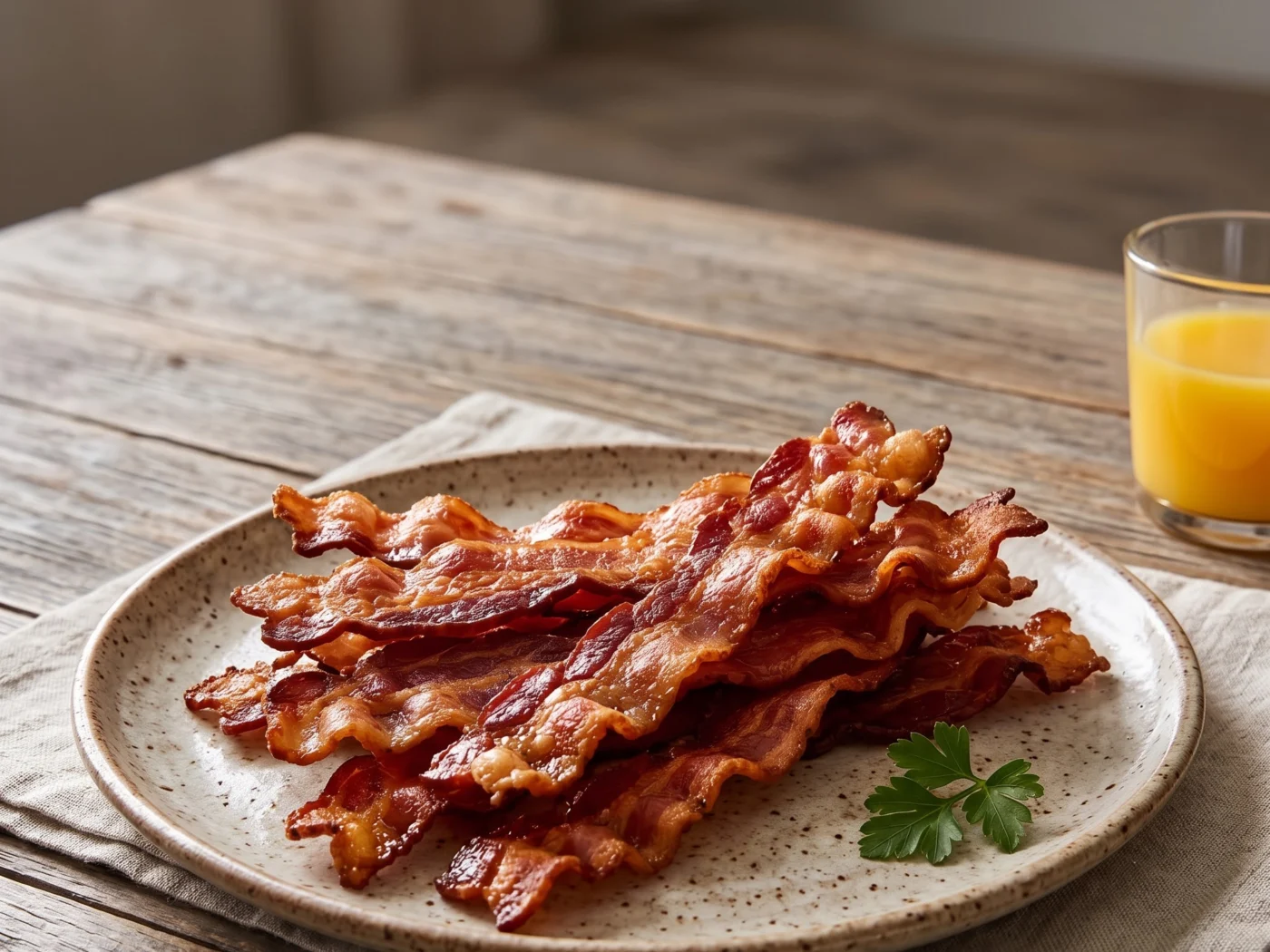
You don’t have to lean over a hot skillet to get uniformly cooked bacon strips to know how to cook bacon in the oven. The process also simplifies preparing a large quantity for breakfast, brunch, sandwiches, salad and burgers. A 400°F (205°C) oven works well for most bacon. Serve all the strips on a sheet pan, cook to desired texture and drain before serving. The 400°F and cooking times listed on recipes from Food Network are based on the recipe and the thickness of the bacon.
Why Cook Bacon in the Oven?
Bacon cooks nicely in the oven where there is ample room to cook it in a single layer. This will ensure that heat is evenly distributed to each strip. Additionally, you don’t need to flip several strips in a skillet.
Bacon is a good source of protein, although the amount varies based on its type, cut, and quantity. According to USDA FoodData Central, several different types of cooked bacon contain approximately 34- 37 g of protein per 100 g.
The oven method is particularly good for making bacon for the whole family. Use a sheet pan to cook a breakfast meal in one pan as you make eggs, toast, pancakes, or other dishes.
The other benefit is the ease of cleaning. Line a large baking sheet with parchment or foil and top with bacon. The rendered fat is trapped in the liner, making the pan easier to clean.
Which Type of Bacon is Best?
Regular-cut bacon is suitable for regular cooking. Thick-cut bacon will take longer to cook as it has a higher meat content and is thicker.
Smoked bacon gives a more intense flavour. A traditional bacon taste can be achieved using regular cured bacon.
When cooking in batches, ensure that the slices are all the same thickness. This will allow them to cook at roughly the same time.
How to Cook Bacon in the Oven
Step 1: Prepare the Baking Sheet
Lay out a baking sheet with aluminium foil or parchment paper. Be sure to have raised edges on the sheet to keep the fat rendered within the sheet.
Arrange bacon in a single layer. Avoid overlapping the slices.
The bacon can be placed on the lined pan. If you prefer to have the bacon raised above the rendered fat, a wire rack can be used as well. There are two methods for cooking bacon in the oven at Food Network: direct pan and wire rack.
Step 2: Choose Your Oven Method
Bacon can be cooked in either a cold oven or a preheated oven.
To have a simple and consistent method, preheat the oven to 400°F (205°C) first. This is the temperature, and about 15-20 minutes is suggested for Food Network’s roast bacon recipe.
The cold-oven method is also described in Food Network. In this method, position the bacon in the cold oven, and then heat the oven to 400°F. When the oven starts heating, the bacon roasts and is ready to eat in about 20 minutes.
Preheat the oven for easier timing for this recipe.
Step 3: Bake the Bacon
In the oven, set the baking sheet in the middle of the oven.
Bake the regular bacon for about 15-20 minutes. Check it beginning at 12 minutes or so, as bacon can get crisp to burnt very quickly.
For thick-cut bacon, it will take 20 to 25 minutes.
The bacon doesn’t need to be turned over during cooking. Let the hot oven cook both sides; meanwhile, the fat will render.
Step 4: Review the Texture
When the cooking time is almost up, check the bacon.
To make soft bacon, take it out when the strips have turned brown but are still pliable.
If the bacon is to be crispy, cook until the strips of bacon are deeply browned and sturdier around the edges.
Remember that bacon will get somewhat crispier as it cools. Take this carryover into account when deciding when to remove it.
Step 5: Drain and Serve
Transfer cooked bacon to a plate lined with paper towels, using tongs.
Allow to stand for 1 or 2 minutes. Some of the surface fat is absorbed by the paper towels, and the cooled bacon is firmer.
Serve hot with eggs, toast, pancakes, waffles, potatoes and breakfast sandwiches.
When to Use a Wire Rack?
A wire rack is not required.
Putting the strips of bacon on the lined baking sheet and cooking them directly on the pan ensures that they cook in their rendered fat. This can result in the formation of very dark brown borders.
A rack is used to lift the bacon up from the fat during cooking. This can help to make the finished strips less greasy.
Decide on the texture you want, and select the method. Both methods are effective.
How to Prevent Bacon From Burning
Bacon is fat-rich and tends to brown easily towards the end of the cooking process.
Do not wait for the maximum cooking time only. Begin checking earlier rather than waiting for the maximum cooking time. Thin slices can be done before thick slices.
Also, ensure that the bacon is in a single layer. Multiple strips may not cook evenly, resulting in spots that are soft and others that are burnt.
Rotate the baking sheet once when cooking if your oven is hot in spots.
How to Save Bacon Grease
Bacon fat may be used to flavour potatoes, eggs, beans, vegetables and cornbread.
To save, let the hot grease cool down a bit. Pour carefully into a heat-resistant container. Avoid pouring hot grease into a plastic container, which may not be heat-resistant.
If cleaner stored fat is desired, strain out the small pieces of bacon.
For a practical serving, three cooked slices of cheese give about 9g of protein (depending on other factors such as slice size and type of cheese). Check your bacon package for the most accurate nutrition information.
If you’re looking to make your breakfast more protein-packed, combine the bacon with eggs, Greek yogurt, cottage cheese or beans.
Common Bacon Cooking Mistakes
Overcrowding the Pan
Leave space between the slices. Crowding may reduce the rate of browning and may result in uneven texture.
Using Too Much Heat
The edges may burn before the bacon is cooked through if the temperature is very high.
Excluding the Final Minutes
Bacon can turn easily towards the end. Regularly inspect it when it begins to turn brown.
Removing It Too Late
Avoid allowing the bacon to get too crispy in the oven. It will become slightly firm when it cools.
Lastly
To know how to cook bacon in the oven begins with a baking sheet with a rim, 1 layer of bacon and a 400°F oven. Bake the regular bacon for about 15-20 minutes and thick-cut bacon for around 20-25 minutes; times may vary depending on thickness and texture desired.
When making a full batch of breakfast, consider using the leftovers for sandwiches, salads, burgers, baked potatoes or pasta. If you have been able to learn the timing of your oven, and you know your preferred brand of bacon, this is a simple and straightforward way to cook uniform bacon with reduced hands-on time.
Frequently asked questions
Cook bacon at 400°F (205°C) for even browning and consistent results.
Regular bacon usually takes 15–20 minutes, while thick-cut bacon takes longer.
Yes. Preheating to 400°F helps you control the cooking time more easily.
Cook it slightly longer and remove it when the strips become deeply browned.
Thicker bacon or shorter cooking times can leave the bacon softer and chewier.


Comments 0