
Sunscreen for Dry Skin: Ingredients That Help Hydrate Your Skin

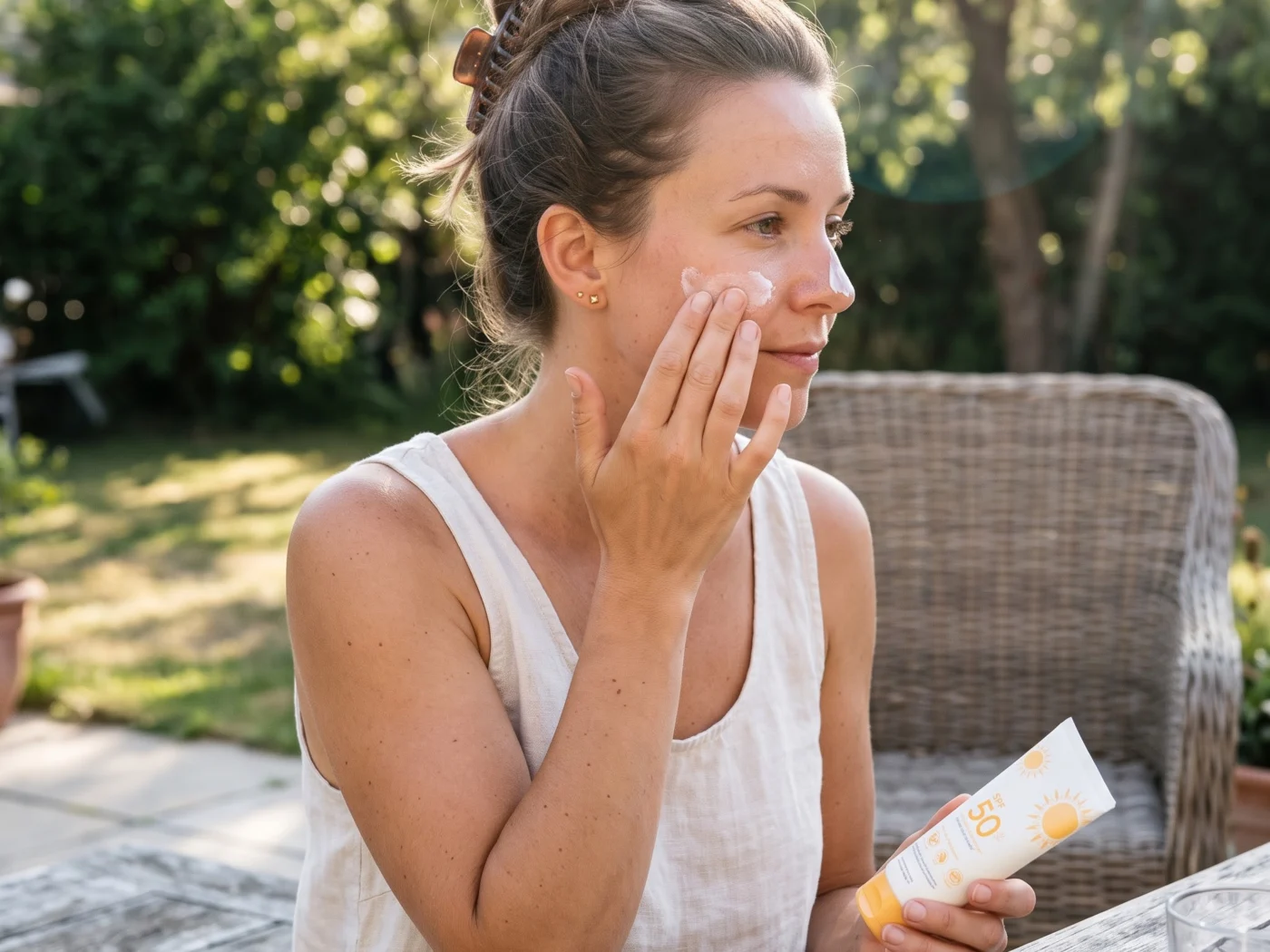
You put on sunscreen with careful precision, but by lunchtime your cheeks are tight, your nose is flaky and your makeup is clinging unwisely to dry patches. Does this sound familiar? Many people with dry skin avoid wearing sunscreen altogether, because it can make their skin feel even drier. But that’s a mistake! The right kinds of sunscreen can actually help to hydrate and protect your skin, making it more comfortable than before.
Why Dry Skin Needs Different Sunscreen
People with dry skin often have damaged barriers . The skin barrier is a thin ‘wall’ that covers the uppermost layer of your skin, preventing moisture loss and keeping irritants out. When this barrier is damaged it loses its ability to hold in moisture, making the skin feel uncomfortable and more sensitive to the touch.
Sunlight accelerates this process , stripping away moisture, weakening the barrier function even more, and causing premature lines and wrinkles. This means that people with dry skin actually need more, not less, sun protection. However, they also need to use a product that will not interfere with their skin’s natural ability to retain moisture.
Many sunscreens on the market are designed for oily or combination skin. These can contain drying alcohols, pore tightening powders, or fragrances that can all be too harsh for dry skin. Knowing which ingredients to look for in a sunscreen for dry skin can help you avoid these irritants.
Ingredients to Look For
You don’t need a degree in chemistry to decipher a sunscreen label! Here are some common ingredients to look for.
Water-Binding Ingredients
Some ingredients in sunscreens act like tiny sponges, soaking up water and binding it into the top layer of your skin to give it a plump, smooth appearance. These help to combat the tight, uncomfortable feeling often experienced during the day by dry skin types. Look for terms such as ‘moisture-binding’ or ‘hydrating’ on the label, and ingredients that make your skin feel softer and more moisturized. Most water-binding ingredients will be found near the beginning of the ingredients list, as these are the active ingredients in the product.
Barrier-Boosting Ingredients
Your skin has certain natural ingredients in it that act like mortar, holding together the cells in your skin. Sunscreens that contain ingredients designed to mimic these, aid the skins’ natural barrier function, helping to restore it. Look for terms such as ‘barrier repair’ or ‘skin identical lipids’.
Nourishing Butters and Oils
Shea butter, jojoba and sunflower seed oils, and squalane (a natural oil found in olives and sugarcane) are all nourishing, non-irritating ingredients that help to soften and plump dry, flaky patches of skin. For dry skin, formulas containing a thicker consistency will be more comfortable, almost like a moisturizer.
Soothing Botanicals
Aloe vera, oat extract, chamomile, calendula, and green tea extract are all commonly known for their soothing abilities. These are ideal for use on sensitive, itchy or sore skin, and can be an especially useful addition for people whose skin has been aggravated by the sun.
Lightweight Emollients
Emollients are ingredients that fill the gaps between skin cells, to make the skin feel smooth. Some of the most effective skincare products contain these, which allow the formulation to spread more easily across the skin and avoid tugging at dry patches.
Mineral or Non-Mineral Sunscreen
There are generally two types of sunscreens: mineral and non-mineral. Mineral sunscreens sit on top of the skin to physically block UV rays, while non-mineral ones are absorbed into the skin and convert the rays into heat.
Both types of sunscreen can be effective for dry skin, but mineral sunscreens are often recommended for delicate or easily-irritated skin. They tend to have a heavier, more greasy texture, but modern tinted versions can be a good alternative for those who wish to avoid a white cast. Non-mineral sunscreens, on the other hand, are often lighter and more easily absorbed into the skin. They often include extra, nourishing ingredients designed to hydrate the skin.
The best option for you is the one your skin reacts best to, and which you are likely to use everyday. You might want to try a few different options to see which ones are the most comfortable for your skin before committing to a bottle. Alternatively, if you have very sensitive skin, you could try a small amount of a new product on the inside of your forearm to test it first.
What to Avoid
Some ingredients can be more harmful to dry, sensitized skin than others:
Alcohol
Alcohol – while alcohol can help to dry excess oil from the skin, it can also strip away much needed moisture. Some alcohols are actually extremely hydrating, but it’s always a good idea to look for a sunscreen that doesn’t list them on the label.
Strong Fragrance
Strong fragrance – added scent is a major irritant and should be avoided by anyone with sensitive skin.
Oil-Absorbing Powders
Oil-absorbing powders – products that promise a ‘matte finish’ tend to contain these, which can be extremely drying.
Exfoliating Actives
Exfoliating actives – your sunscreen should protect your skin, not remove dead skin cells.
If your skin is currently sensitive and uncomfortable, it’s a good idea to look for a fragrance-free sunscreen, and avoid other potentially irritating actives.
Sunscreen Texture and Strength
Many sunscreens will say on the label if they offer ‘broad spectrum’ protection; this means that they help to guard against both visible light and UV rays, which damage the skin by causing lines, wrinkles, and uneven pigmentation. A good sunscreen will generally have an SPF of 30 or above.
As mentioned earlier, sunscreens that have a cream or lotion consistency can be more comfortable for dry skin. Sticks are often useful for reapplication during the day, but can tug at dry patches and should be applied over a layer of moisturizer. Gels and ultra-fluid sunscreens can be good in hot weather, but may feel too watery for use during the colder months.
How to Apply Sunscreen
Applying your sunscreen correctly can be just as important as using the right product.
Apply in the Morning
Apply the product to clean, damp skin in the morning.
This will help to lock in your moisturizer and keep your skin feeling hydrated throughout the day.
Moisturize Before Makeup
Layer a small amount of moisturizer over the top of your sunscreen and wait a moment for it to sink in before applying your makeup.
Use Enough Sunscreen
Use enough sunscreen to ensure full coverage; a good rule of thumb is to apply a nickel-size amount of product to the face, or around two finger-lengths of product.
Applying too little can drastically reduce the level of protection.
Pat, Don’t Rub
Pat the product gently onto your skin instead of rubbing in, to avoid tugging and pilling on dry patches.
Cover Your Face and Neck
Make sure to apply sunscreen to all parts of your face and neck.
Many people forget the ears, the back of the neck, and the hairline, but these areas should also be protected.
Reapply Regularly
Reapply sunscreen every two hours when spending extended time outside, and always after going swimming or sweating heavily.
Common Mistakes
Avoid these common mistakes when using sunscreen with dry skin to minimize irritation and maximize protection.
Not Wearing Sunscreen in Winter
UV light can penetrate through clouds and even glass, so it’s important to continue wearing sunscreen throughout the year. Snow can help to reflect light, meaning that it’s even more important to wear a sunscreen during the cold months.
Using Makeup With SPF
You would have to apply far more makeup than you normally would to get the level of protection promised by the packaging.
Over-Cleansing
Aggressive cleansers can strip the skin of its natural oils, leaving it itchy and dry before even applying a moisturizer.
Assuming Moisturizer Offers Sun Protection
Most moisturizers do not offer an adequate level of sun protection, with the exception of those specifically marked as offering ‘broad spectrum’ or SPF.
The Final Say
Sunscreen and dry skin don’t have to be mutually exclusive! Look for a broad-spectrum sunscreen that offers hydration and protection, while also including nourishing ingredients to restore the skins’ natural barrier. Avoid harsh fragrances and finishing agents, and always apply your sunscreen over a layer of moisturizer for the most comfort.
Frequently asked questions
You can use regular sunscreen on dry skin, but it's often best to chose a cream or lotion type with extra hydrating ingredients to avoid irritating the skin.
It is often necessary to apply a moisturizer before sunscreen, even if the sunscreen contains hydrating ingredients. A moisturizer can provide extra nourishment and help the sunscreen to apply more smoothly.
An SPF of 30 or above that protects against both UVA and UVB rays is a good option for any skin type. It's more important to apply a sufficient amount of sunscreen and reapply it regularly throughout the day.
This can be due to a few factors: using a sunscreen that contains drying ingredients; applying the product to dry skin, or aggressively rubbing the product into the skin. To avoid this, try using a fragrance-free, cream-like sunscreen, applying a moisturizer first, and gently patting the product onto the skin.
Mineral sunscreens are not inherently better for dry skin; they are often preferred by people with sensitive skin who find that chemical sunscreens can be too irritating. Many people with dry skin find that both types of sunscreens can work, as long as they are choosing one that contains hydrating ingredients.

Comments 0